Get Back Pain Relief in Cincinnati – Schedule Today
Ready to stop planning your day around your back pain and get back to the things you enjoy in Cincinnati? Click below to schedule a chiropractic appointment at Simply Well Chiropractic in Cincinnati.
Research suggests that a large majority of chiropractic patients report relief or satisfaction with their treatment outcomes when care is provided safely and appropriately.
Understanding Back Pain in Cincinnati and When Chiropractic Care Can Help
If back pain is stopping you from working, sleeping, or enjoying life, Simply Well Chiropractic offers personalized, non‑surgical back pain relief in Cincinnati to help you move confidently again. We combine gentle chiropractic care, SoftWave Therapy, and modern rehab so you are not just masking pain—you are addressing the underlying mechanical and movement issues that keep it coming back.
Most adults will experience significant back pain at some point in life, and spine‑related problems are a leading reason people seek orthopedic and pain care each year. The good news is that many of these cases respond well to conservative treatment when it is matched to the right diagnosis.
Persistent back pain in Cincinnati most often falls into three categories:
Back Pain Conditions Chiropractic Care Can Help
Chiropractic care can play a role in the management of many common back pain conditions when used appropriately. Examples include:
If we identify red‑flag signs that suggest you need imaging, pain management, or a surgical opinion, we will communicate that clearly and help you connect with the appropriate providers.
How Chiropractic Care Helps Your Back
Understanding what happens during an adjustment can make care feel less mysterious and more intentional. Here is how chiropractic care can influence your spine, muscles, and nervous system in ways that support back pain relief.
Restoring Healthy Spinal Motion
When you sit too long, move awkwardly, or strain your back, the small joints in your spine can become stiff and restricted, much like a door hinge that does not swing smoothly anymore. Improving that motion is one of the core goals of a chiropractic adjustment.
What happens during an adjustment
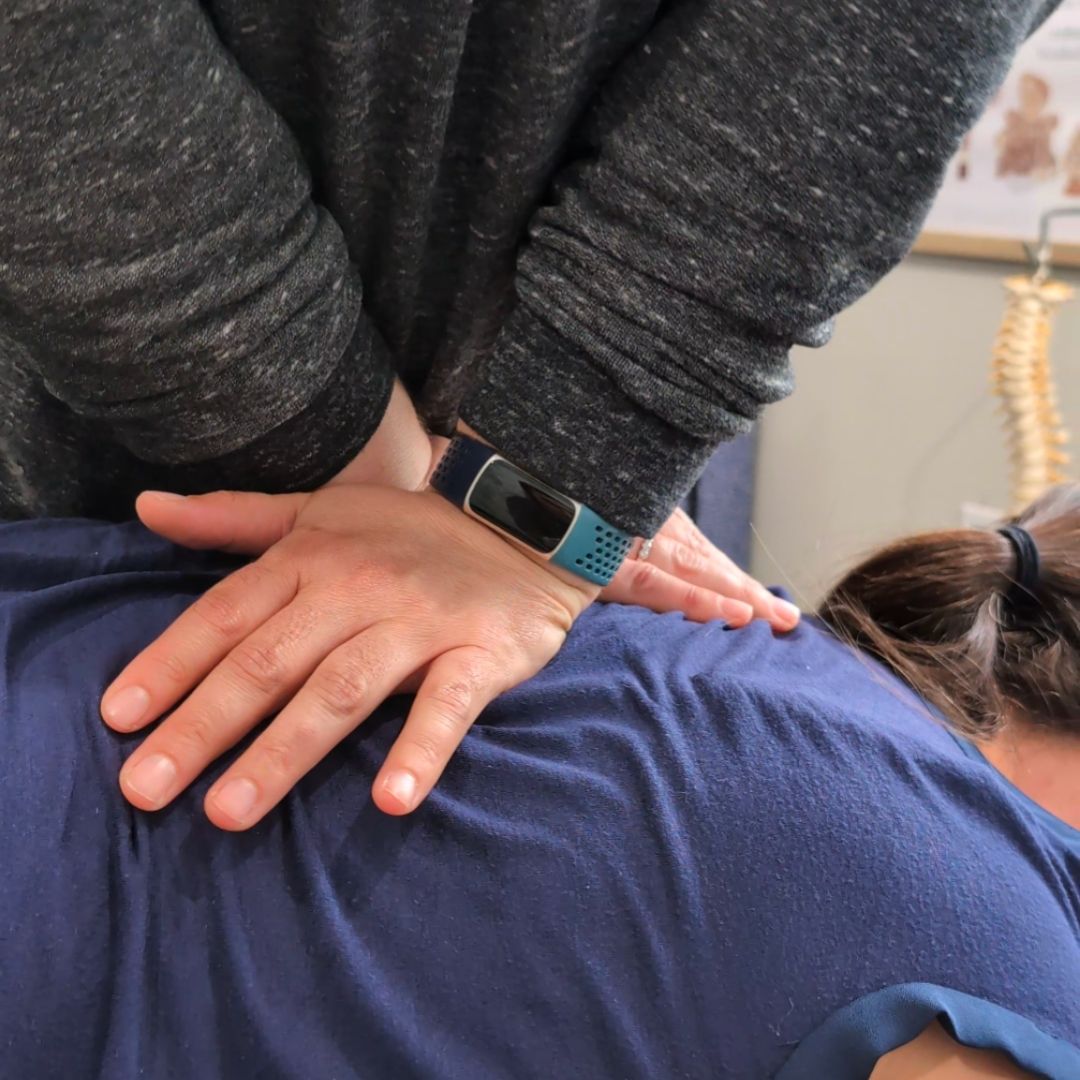
Dr. Faith uses her hands or a small instrument to deliver a quick, controlled impulse into a specific joint. The actual movement is very small—only a few millimeters—but it can be enough to help the joint glide more normally and reduce mechanical stress on nearby tissues.
Why you might hear a “crack”
That popping sound is not bones grinding or “cracking.” It is simply gas shifting in the joint fluid as pressure changes, similar to the sound you hear when you gently crack your knuckles.
How this affects your muscles
Inside your muscles and tendons are tiny sensors that monitor tension and stretch. When a restricted joint is adjusted, these sensors are stimulated and can signal overactive, tight muscles to relax and underactive muscles to “wake up,” helping your spine move more freely and evenly.


Calming How Your Brain Processes Pain
Pain is not just about what is happening in your back—it is also about how your brain interprets signals from your body. Chiropractic care can influence this processing in helpful ways.
The pain signal pathway
When there is irritation or injury, specialized nerve endings send “danger” messages through your spinal cord to areas of your brain that interpret pain, stress, and emotion. Over time, these pathways can become over‑sensitive, so even normal movement can feel painful.
How adjustments can change the signal
Research suggests that spinal adjustments can temporarily change activity in the parts of the brain and spinal cord that process pain. In simple terms, it is like turning down the volume on some of those incoming pain messages, which is one reason many people feel looser, lighter, or more comfortable shortly after care.
Supporting a Healthier Inflammatory Response
Inflammation is part of your body’s normal healing process, but when it lingers or becomes excessive, it can make back pain feel more intense and widespread.
What happens with inflammation
When tissues are irritated, your body releases chemical messengers that ramp up inflammation and can sensitize nearby nerves. This can leave your back feeling swollen, hot, or achy, even with small movements.
Where chiropractic fits in
By improving joint motion and reducing mechanical irritation, chiropractic care can help your body shift away from a constantly “flared‑up” state. For many people, this coincides with a gradual decrease in stiffness and soreness and an increase in comfortable movement over time.


Improving Coordination, Balance, and Posture
Your brain constantly uses information from your spine and joints to figure out where you are in space and how to move safely; this is sometimes called proprioception.
Spine–brain communication
The joints and soft tissues around your spine send a steady stream of position and movement information to your brain. When joints are restricted or irritated, that input can become less accurate, which may contribute to poor posture, clumsier movement, or recurring strain.
How adjustments help you move better
By restoring more normal motion to the spine, chiropractic adjustments can help “clean up” the signals traveling between your body and brain. Over time, this can translate into better balance, more efficient posture, a stronger and more coordinated core, and a lower risk of re‑injury during everyday activities and exercise.
Back Pain Treatments We Offer at Simply Well Chiropractic
Our goal is to provide back pain relief in Cincinnati that is safe, effective, and as conservative as possible. Your plan may include:
- Chiropractic adjustments for back pain to improve joint motion and reduce irritation
- SoftWave therapy to address stubborn soft‑tissue and tendon problems (when appropriate)
- Gentle mobilization and soft tissue work to decrease muscle tension and guarding
- Specific rehab exercises to build strength in your core, hips, and glutes so your spine is better supported
- Posture and ergonomics coaching tailored to your work, driving, and sleep positions
- Home care strategies such as stretches, position changes, and activity modifications
We will always explain what we recommend, why we recommend it, and how it supports your goals.
Why Choose Simply Well Chiropractic for Back Pain Relief?
In Cincinnati, many offices treat back pain, but our focus is on listening first and building a plan around what you want your life to look like. Whether you want to pick up your kids without wincing, sit through a workday without stiffness, or get back to running, we tailor care to the way you live.
At Simply Well Chiropractic, you’ll find:
- A doctor who takes time to understand your story, not just your X‑rays
- Evidence‑informed chiropractic care, not one‑size‑fits‑all treatment plans
- A calm, welcoming environment where you will feel heard, respected, and supported
- Convenient access for Fairfax, Mariemont, Hyde Park, Oakley, and surrounding Cincinnati neighborhoods
Our Back Pain Treatment Approach
Our goal is to provide back pain relief in Cincinnati that is safe, effective, and as conservative as possible. We focus on improving how your spine and joints move, calming irritated nerves, and restoring strength and stability so your results last.
Step 1: Thorough Evaluation
On your first visit, we start with:
- A detailed conversation about your pain, lifestyle, and goals.
- Orthopedic and neurologic testing to identify irritated joints, discs, or nerves.
- Posture and movement assessment so we can see how your body behaves in real‑life positions.
If imaging is needed, we’ll discuss that with you and coordinate as appropriate.
Step 2: Personalized Back Pain Plan
Based on what we find, we create a clear, step‑by‑step plan. Every back pain case is different, but your plan may include:
- Chiropractic adjustments for back pain to improve joint motion and reduce irritation.
- Gentle mobilization and soft tissue work to decrease muscle tension and guarding.
- Specific exercises to build strength in your core, hips, and glutes so your spine is better supported.
- Posture and ergonomics coaching tailored to your work, driving, and sleep positions.
You’ll always know what we’re doing, why we’re doing it, and how it supports your goals.
Step 3: Relieve Pain, Then Build Long‑Term Stability
In the early phase, the priority is pain relief and reducing inflammation. As you improve, we shift toward building resilience—so your back can handle life’s demands:
- Progressively challenging exercises to improve strength and control.
- Education on lifting mechanics, everyday movement, and self‑care.
- Periodic check‑ins to help prevent flare‑ups and catch small issues before they become big problems.
Back Pain Relief in Cincinnati Starts Here
Schedule Your Back Pain Appointment
Take the next step toward relief:
- Call our office to schedule your first appointment.
- Request an appointment online at your convenience.
- Ask about our current new patient availability for back pain.
The sooner you start, the sooner your back can start moving—and feeling—like it should.
Frequently Asked Questions About Back Pain and Chiropractic Care
Address
5721 Dragon Way #101, Cincinnati, OH 45227
info@simplywellchiro.com
Phone
(513) 271-1233
Dr. Faith
Written and medically reviewed by Dr. Faith Swartzendruber, DC
Ohio Chiropractic License: DC-05144 | Palmer College of Chiropractic
Founder, Simply Well Chiropractic, Cincinnati