Turn Short‑Term Stretch Relief Into Lasting Back Pain Results
If your back is tight, achy, or stiff, a short daily stretching routine can ease pain and help you move more comfortably throughout the day. You don’t need a gym, special gear, or an hour of free time—just a few minutes, a firm surface, and your own body weight.
At Simply Well Chiropractic in Cincinnati, we often teach these exact stretches to patients between visits to support the work we’re doing in the office and help prevent flare‑ups. This article walks you through five simple, chiropractor‑approved stretches you can safely try at home, plus tips on when to stop and when to call for help.

Read this first: Safety and when not to stretch
Gentle motion is one of the best things you can do for most types of back pain, but there are important exceptions. Before you start, keep these guidelines in mind:
- Stop and seek care right away if your back pain is accompanied by leg weakness, loss of bowel or bladder control, numbness in the groin area, a recent major fall, or unexplained fever or weight loss.
- Ease into each position and stay in a pain‑free range; you should feel a mild stretch, not sharp, shooting, or worsening pain.
- Move slowly and breathe normally—no bouncing or forcing your body into deeper ranges.
- If you’ve had spine surgery, osteoporosis, or a diagnosed disc herniation, ask your chiropractor or medical provider which motions you should avoid.
If any stretch increases your pain or triggers tingling, burning, or numbness down your leg, back out of the position and schedule an evaluation. Persistent or worsening pain deserves a proper diagnosis rather than more “trying this and that” at home.
How these stretches help your back
Most everyday back pain comes from irritated joints and overworked muscles around your spine, often aggravated by sitting, lifting, poor posture, and stress. The five stretches below are chosen to:
- Gently move your spine in the directions it rarely sees when you’re sitting at a desk or driving.
- Lengthen tight hip flexors, hamstrings, and glute muscles that tug on your pelvis and change how your spine bears load.
- Activate your deep core and glute muscles so your back doesn’t have to “do everything” alone.
Consistent, low‑intensity stretching improves blood flow, reduces stiffness, and supports healthier movement patterns over time.
Your 5‑stretch, no‑equipment routine
You can do this routine on the floor, a yoga mat, or even on a firm mattress if getting to the floor is difficult. Aim to move through it once or twice daily—morning to “uncrumple” from sleep and evening to undo a day of sitting.
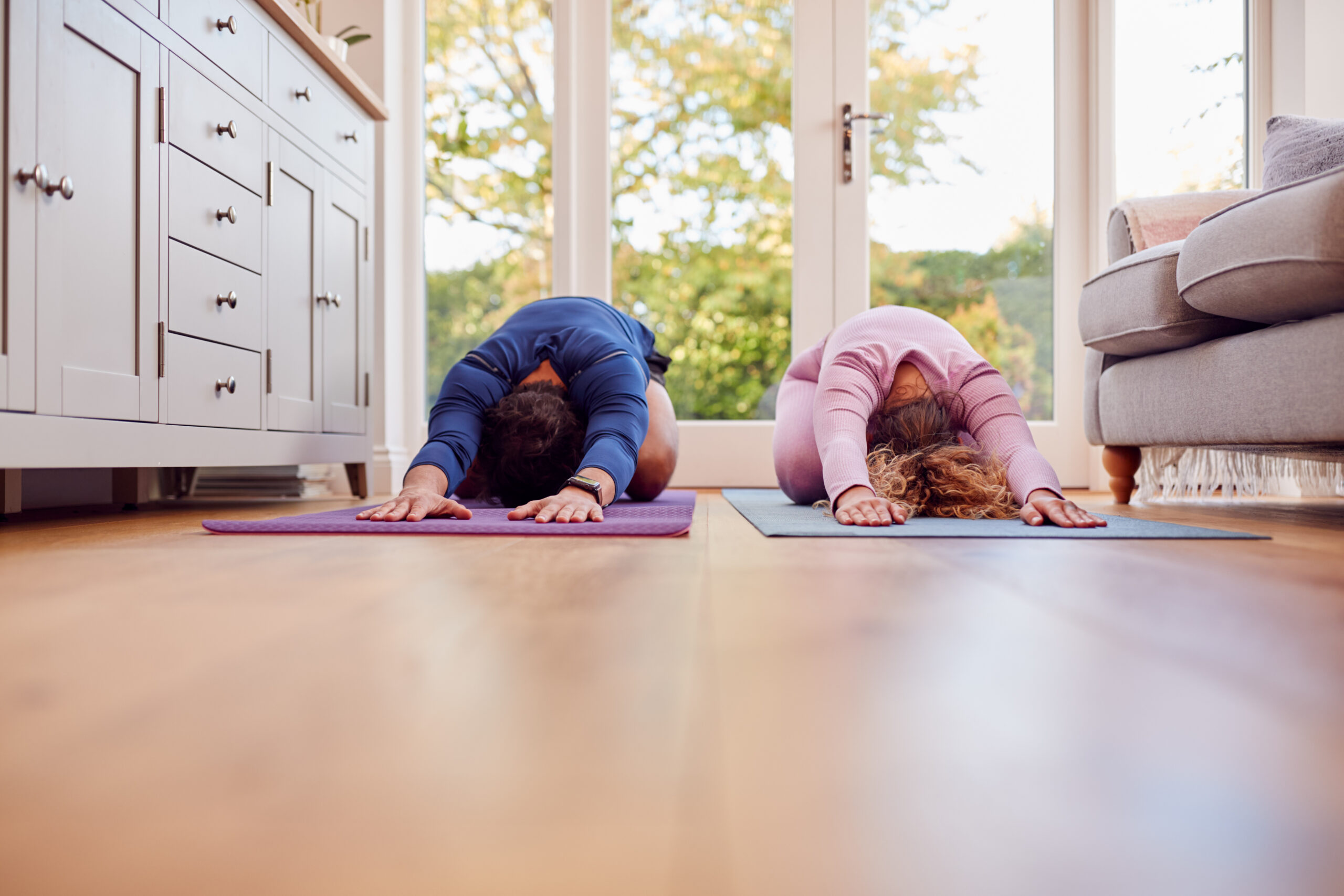
Child’s Pose (Prayer Stretch) – Decompress and calm
Targets: Lower back muscles, mid‑back, hips, and shoulders.
- Start on your hands and knees with your knees about hip‑width apart.
- Gently sit your hips back toward your heels as you reach your arms forward, lowering your chest toward the floor.
- Let your forehead rest on the floor (or a pillow) if comfortable.
- Breathe slowly and relax your belly as you feel a gentle stretch along your spine.
Why chiropractors like it: This position opens the small joints in your spine, decreases compressive load, and taps into the parasympathetic (“rest and digest”) side of your nervous system, which can lower protective muscle guarding.
Make it easier: Widen your knees or place a folded pillow between your calves and thighs if your knees or hips feel tight.
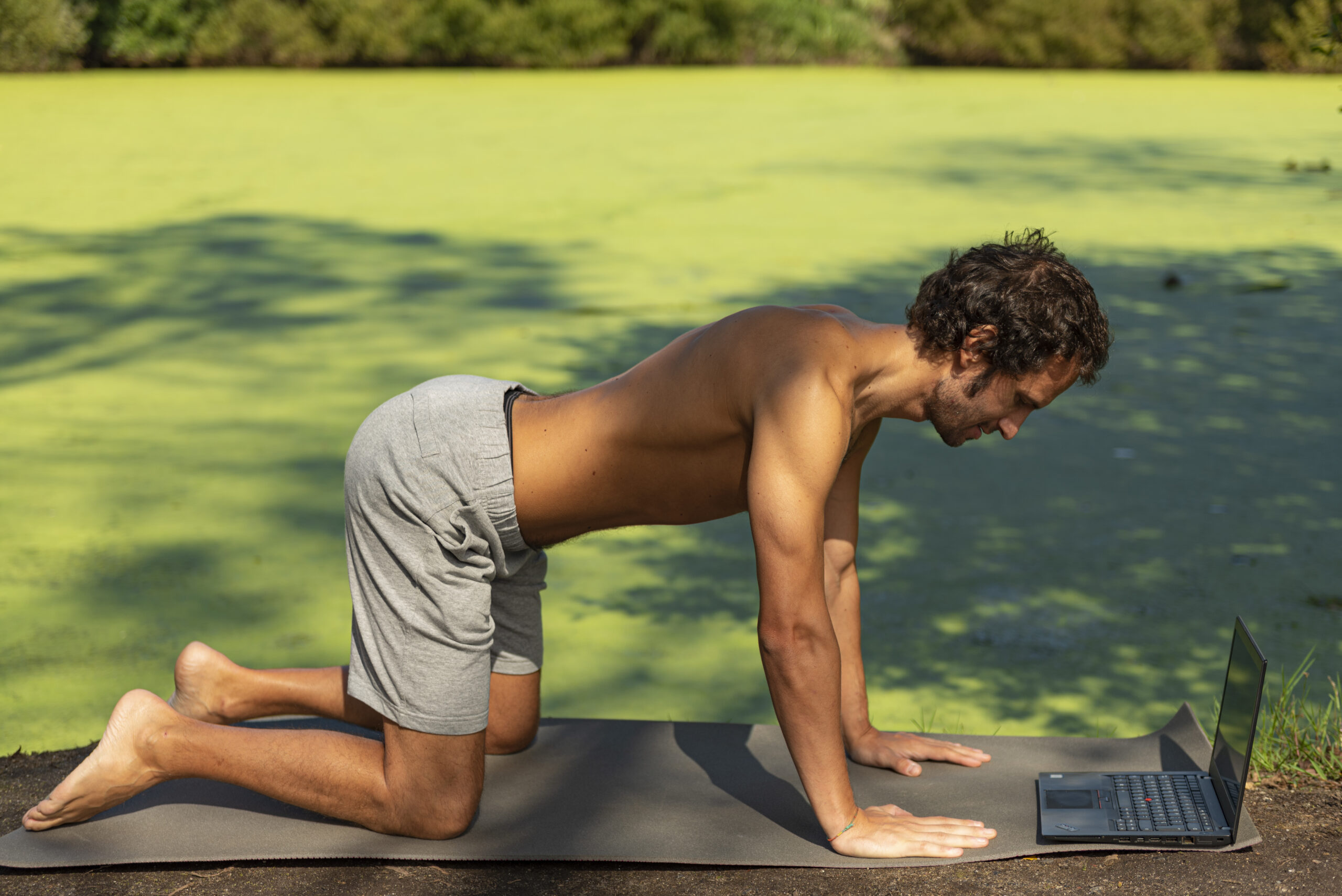
Cat‑Cow – Mobilize a stiff spine
Targets: Entire spinal column, especially the lower back; also warms up core and shoulder stabilizers.
- From hands and knees, stack your shoulders over your wrists and hips over your knees.
- As you exhale, slowly round your spine toward the ceiling, tucking your tailbone and gently dropping your head (Cat).
- As you inhale, reverse the motion: let your belly soften toward the floor, lift your chest and tailbone, and gently look forward (Cow).
- Move smoothly between Cat and Cow, matching your movement to your breath.
- Perform 8–12 cycles, once or twice per day.
Why chiropractors like it: Cat‑Cow gently glides each spinal segment without loading it heavily, which helps with joint lubrication, posture, and awareness of how your spine moves in space.
Chair alternative: Sit tall with your hands on your knees and mimic the same rounding and arching motion if getting onto the floor is difficult.
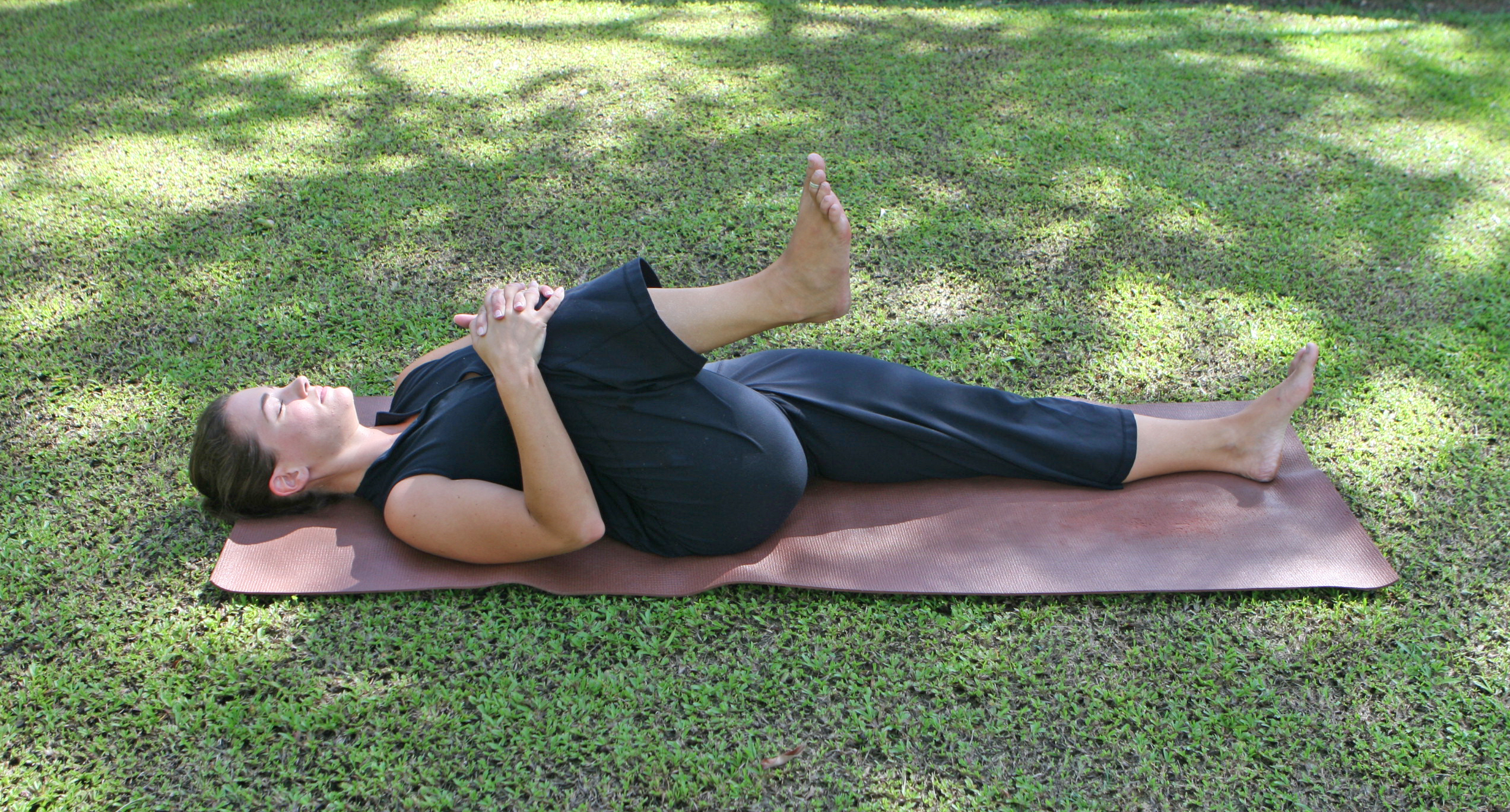
Knee‑to‑Chest Stretch – Ease tight lower back and glutes
Targets: Lumbar muscles, gluteal muscles, and the small joints of the lower spine.
- Lie on your back with your knees bent and feet flat on the floor.
- Gently bring one knee toward your chest, clasping your hands behind your thigh or over your shin.
- Keep your other leg relaxed and your low back resting comfortably on the floor.
- You should feel a mild stretch in the lower back and buttock of the bent‑knee side.
- Hold 20–30 seconds, repeat 2–3 times on each leg.
- Optional: Bring both knees to your chest at once for a broader stretch, as long as it feels good.
Why chiropractors like it: Knee‑to‑chest reduces tension where many people feel their “knot” or “catch,” especially after lots of sitting or driving.
Modify if you have hip stiffness: Hold behind your thigh rather than over your shin to keep the hip angle more open
Pelvic Tilt – Train your deep core to share the workload
Targets: Deep abdominal muscles and lower back stabilizers.
This one looks simple, but it’s one of the most important pieces of a healthy back routine.
- Lie on your back with knees bent, feet hip‑width apart, and arms relaxed by your sides.
- Notice the natural “curve” under your lower back—there’s usually a small space between your back and the floor.
- Gently tighten your lower abdominal muscles as if drawing your belly button toward your spine, and flatten your lower back into the floor by tilting your pelvis slightly toward your ribs.
- Hold that flattened position while breathing calmly. Avoid clenching your glutes or holding your breath.
- Hold 5–10 seconds, relax 5 seconds; repeat 8–12 times.
Why chiropractors like it: Pelvic tilts retrain the muscles that stabilize your lumbar spine so your back doesn’t have to “muscle through” every movement alone.
Progress it: Once you can hold a pelvic tilt comfortably, you can later combine it with marching (lifting one foot a few inches at a time) to challenge your core without heavy loading—something your chiropractor or rehab provider can show you in person.
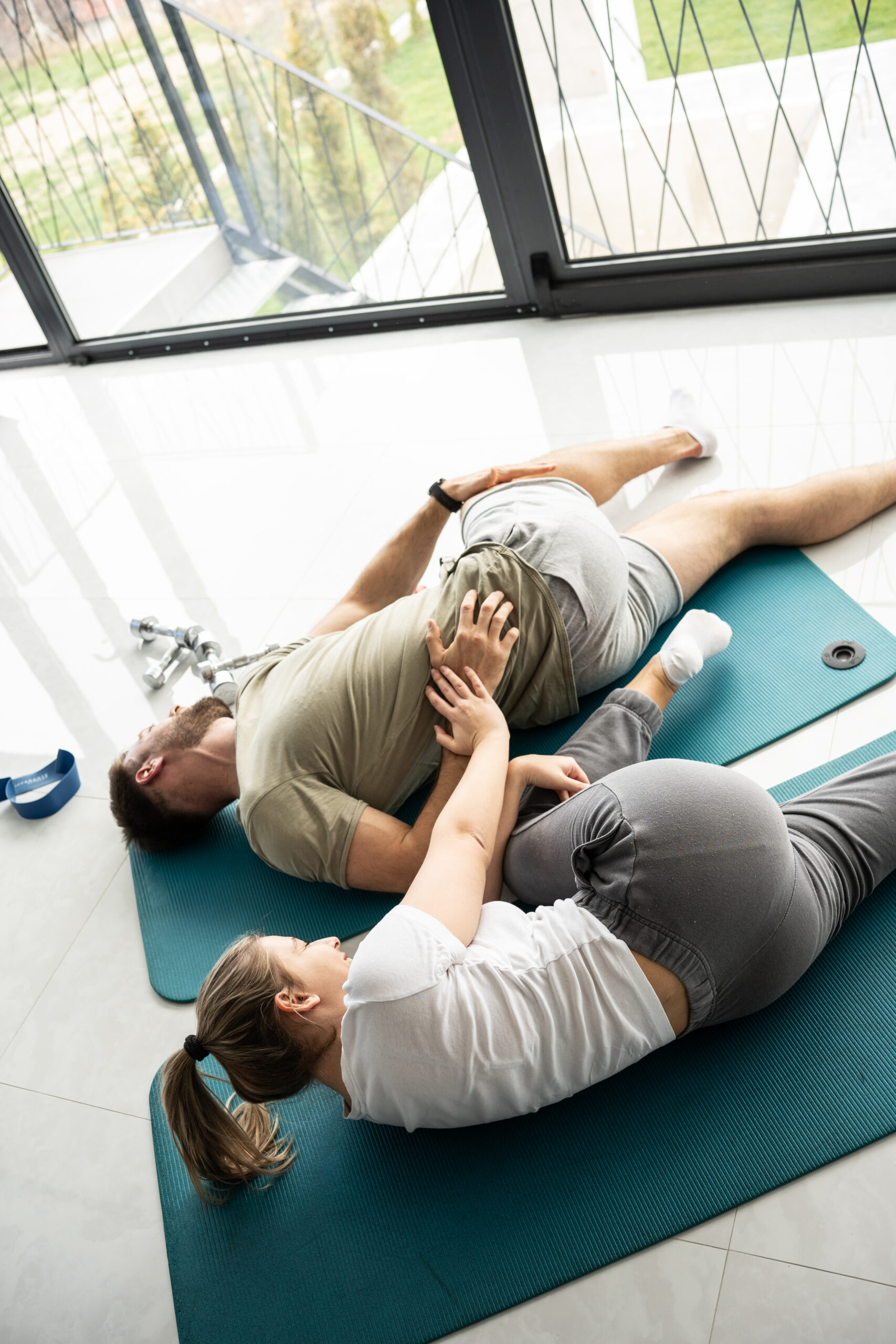
Supine Trunk Rotation – Gently loosen stiff joints and hips
Targets: Lumbar spine, hips, obliques, and mid‑back.
- Lie on your back with knees bent and feet flat on the floor.
- Extend your arms out to the sides like a “T,” palms down.
- Keeping your shoulders grounded, slowly let both knees roll to one side, only as far as feels comfortable.
- Pause and breathe into the stretch through your side and low back.
- Hold 10–20 seconds, then bring your knees back to center and repeat to the other side.
- Complete 5–10 repetitions per side.
Why chiropractors like it: Rotational movement is often missing from our day, yet your spine is built to rotate; this stretch helps restore that motion without heavy twisting or forcing.
Make it gentler: Place a pillow or folded blanket under your knees so they rest on support before they reach the floor.
Optional bonus: Standing Side Bend for desk workers
workspace.
- Stand tall with feet hip‑width apart, arms relaxed at your sides.
- Slide one hand down the outside of your leg as you reach the opposite arm overhead, gently bending to the side.
- Keep your chest facing forward; you’re lengthening one side of your body while gently contracting the other.
- Hold 10–20 seconds each side, repeat 3–5 times.
This move targets the muscles along your ribs and lower back that tighten when you lean over keyboards and phones.our chiropractor or rehab provider can show you in person.
How often should you do these stretches?
Most people with mild to moderate, non‑traumatic back pain do well starting with:
- Frequency: 1–2 sessions per day.
- Time: 5–10 minutes per session.
- Intensity: Mild to moderate stretch only, never into sharp or spreading pain.
Back pain that has been around for weeks or months usually doesn’t disappear overnight, but consistent movement over several days to a few weeks can significantly reduce stiffness and help you tolerate daily activities better.
When stretching alone isn’t enough
Stretching is powerful, but it’s one piece of a bigger picture. You may need more than home care if you notice any of these patterns:
- Pain lasts longer than 2–4 weeks or keeps coming back every few months.
- You feel like your back “locks,” “catches,” or spasms with small movements.
- One leg consistently feels weaker, heavier, or more numb than the other.
- Your pain is interfering with sleep, work, or the ability to enjoy normal daily activities.
In those situations, it’s time for a full evaluation rather than more internet trial‑and‑error. A chiropractor can examine how your spine, hips, and nerves are functioning, rule out red flags, and build a plan that may include gentle adjustments, targeted rehab exercises, ergonomic changes, and lifestyle guidance tailored to your body.
At Simply Well Chiropractic, we also look at how factors like your work setup, sleep position, and activity level are feeding the problem, and we’ll give you clear next steps—not just a list of stretches and wishes for good luck.
How chiropractic care and home stretching work together
Research and clinical guidelines consistently show that staying active, using specific exercises, and considering manual therapies as part of a comprehensive plan for most mechanical low back pain. When you pair regular chiropractic care with a simple home routine like the five stretches above, you:
- Maintain the mobility and alignment we create in the office between visits.
- Retrain muscles and movement patterns so gains “stick” longer.
- Build confidence moving your back again, instead of fearing every twinge.
For many patients, this combination shortens recovery time, reduces flare‑ups, and decreases reliance on medication.
If you’re in the Cincinnati area and your back has been slowing you down, we’re happy to help you figure out what’s really driving your pain and customize these stretches (and more) to fit your specific diagnosis, age, and activity level.
Need Additonal Help?
Need additional help? If your stretches aren’t giving lasting relief—or if your pain is getting in the way of sleep, work, or family time—schedule a personalized back pain evaluation at Simply Well Chiropractic today.
Address
5721 Dragon Way #101, Cincinnati, OH 45227
info@simplywellchiro.com
Phone
(513) 271-1233
Dr. Faith
Written and medically reviewed by Dr. Faith Swartzendruber, DC
Ohio Chiropractic License: DC-05144 | Palmer College of Chiropractic
Founder, Simply Well Chiropractic, Cincinnati