We’re all suffering from tech neck
If your neck, shoulders, or upper back ache after a day on your phone or laptop, you are not alone. Tech neck has become one of the most common complaints we see at Simply Well Chiropractic in Cincinnati, and the good news is that it is very treatable with the right plan.
At our office, we combine gentle chiropractic care, targeted exercises, and practical posture coaching to help you relieve pain now and protect your spine long term.
What Is Tech Neck, Really?
Tech neck is the strain that builds up in your neck and upper back from spending long periods looking down at screens or sitting in a slouched position. Over time, that repeated forward‑head posture can irritate joints, muscles, discs, and nerves in your neck.
Common tech neck symptoms include:
- Achy or sharp neck pain, especially after screen time
- Tightness in the shoulders and upper back
- Headaches that start at the base of the skull
- Stiffness or reduced ability to turn your head
- Burning or fatigue between the shoulder blades
If you recognize yourself in this list, your neck is telling you it is under more stress than it can comfortably handle.
How Much Weight Your Neck Really Carries
When we talk about tech neck, we’re not just talking about a little extra tension — we’re talking about a massive increase in load on a very small area of your spine. The average human head weighs about 10 to 12 pounds when it’s balanced directly over your shoulders. As soon as you tilt your head forward to look at a phone or laptop, gravity and leverage start working against you, and the effective weight your neck has to support climbs dramatically. At a 15-degree tilt, your neck is suddenly managing about 27 pounds of pressure. At 30 degrees, that jumps to roughly 40 pounds. By 45 degrees, your neck is holding close to 50 pounds, and at a 60-degree forward tilt — the “looking straight down at your phone” posture — your cervical spine may be under as much as 60 pounds of load.
Now imagine that heavy load on your neck and shoulders not for a few minutes, but for hours every day. The ligaments, muscles, and discs in your neck are forced to work overtime just to hold your head up. Over time, this constant strain can lead to:
- Chronic soreness and stiffness in the neck and upper back
- Tight, overworked neck and shoulder muscles
- Decreased mobility and difficulty turning your head comfortably
- Accelerated wear-and-tear on spinal joints and discs
This is why tech neck isn’t just about “sitting up straight.” The physics of head position make a huge difference in how hard your neck has to work, and that’s exactly what we focus on correcting with posture coaching, exercises, and chiropractic care.

How Tech Neck Differs From “Regular” Neck Pain
Neck pain can come from many things: a whiplash injury, arthritis, a one-time awkward sleep position, or even a sudden strain from lifting. Tech neck is different because it’s:
- Repetitive: Hours every day in the same posture
- Habit-based: Tied to your phone, laptop, gaming, or reading habits
- Progressive: It usually starts as stiffness or mild discomfort, then gradually becomes more frequent and intense if nothing changes
Think of “regular” neck pain as a single bad event. Tech neck is more like a slow drip. It may not seem like a big deal at first, but if you let it drip long enough, it creates real structural changes in the neck and upper back.
Who We Help With Tech Neck in Cincinnati
At Simply Well Chiropractic, we see tech neck in people of all ages and lifestyles, including:
- Office workers and remote workers who spend hours on laptops
- Students and teachers using tablets and computers daily
- Parents looking down at phones, tablets, or small children
- Gamers and content creators spending long stretches in one position
If you live or work in or around Cincinnati and your screen time is leaving your neck sore, we can help you understand what is going on and what to do about it.
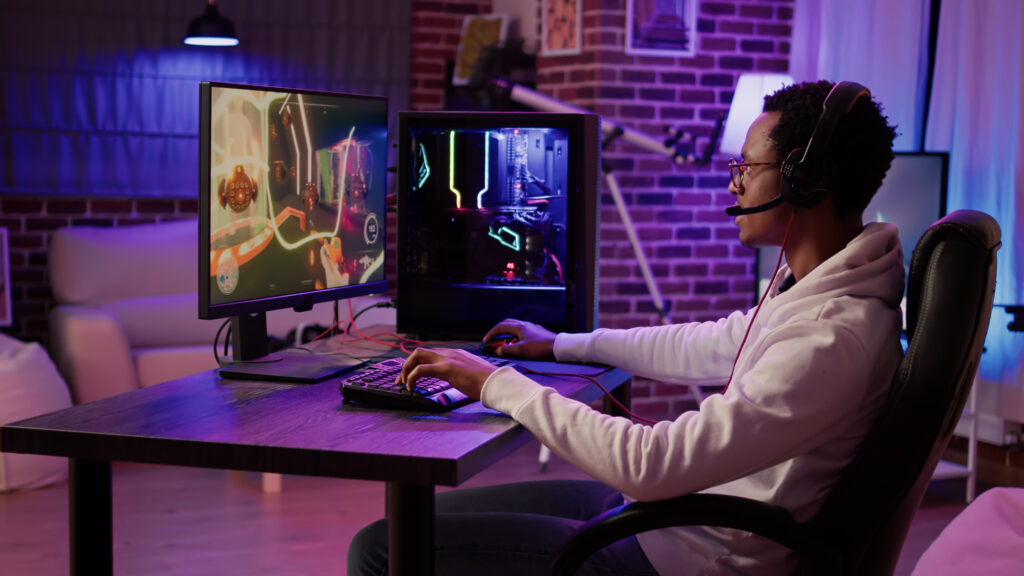


Everyday Habits That Cause Tech Neck
Tech neck rarely comes from one “bad” day. It usually builds slowly from everyday choices like:
- Looking down at your phone for long stretches
- Working on a laptop that sits too low on the desk
- Hunching over a tablet or book on the couch or in bed
- Sitting without back support and leaning forward toward the screen
Because these habits are so common, many people do not notice how much they are stressing their neck until pain shows up.
Tech Neck in Kids and Teens
Absolutely — and we see it a lot.
Teens and 20-somethings are actually one of the biggest tech neck groups in our practice right now. They come in with:
- Stiffness and soreness between the shoulder blades
- Achy neck after class, homework, or gaming
- Headaches that start at the base of the skull
On exam, Dr. Faith often finds:
- Forward head posture
- Rounded shoulders
- Tight chest and neck muscles
- Weak upper back muscles
Even though they’re young, that doesn’t mean they’re immune. The earlier tech neck patterns start, the more important it is to address them before they become chronic.


Early Warning Signs of Tech Neck
You don’t have to wait until your neck “goes out” to take tech neck seriously. Early warning signs include:
- Persistent stiffness when you turn your head
- A dull ache at the base of your skull or into the upper back
- Feeling like your head is “heavy” at the end of the day
- Needing to constantly stretch or roll your shoulders
- Headaches that seem to start in your neck or behind your eyes
You might also notice your posture in photos — head forward, shoulders rounded, upper back slouched — even when you thought you were “standing up straight.”
A Simple At-Home Test for Forward Head Posture
Here’s a quick check you can do at home to check if you have forward head posture:
- Stand with your back against a wall.
- Make sure your glutes and shoulder blades are touching the wall.
- Relax your shoulders.
- Try to rest the back of your head on the wall without tilting your chin up.
If the back of your head can’t comfortably touch the wall without you lifting your chin, there’s a good chance you have some degree of forward head posture — a common component of tech neck.
When to See a Chiropractor for Tech Neck Treatment in Cincinnati
Some symptoms mean it is time to get your neck evaluated instead of waiting it out. You should consider scheduling an appointment if:
- Your neck pain has lasted more than 2–3 weeks
- Pain or stiffness is getting worse instead of better
- You have headaches several times a week
- Pain is starting to travel into your shoulder, arm, or between your shoulder blades
- You notice numbness, tingling, or weakness in your hands or arms
- Your sleep is disrupted by neck pain
If you are in the Cincinnati area and any of these sound familiar, a thorough exam at Simply Well Chiropractic can help you find out what is going on and what to do next.
Tech Neck Treatment at Simply Well Chiropractic
Our goal is to give you a clear plan, not just a list of stretches. A typical tech neck treatment process in our Cincinnati office includes:
- Consultation and history
We start by listening. You will tell us when your pain started, what makes it better or worse, how you work, and what you have already tried. - Comprehensive exam
We check your posture, alignment, range of motion, and specific areas of tenderness. When appropriate, we may recommend imaging or review any studies you have already had. - Personalized chiropractic care
Based on your findings, we use gentle chiropractic adjustments to improve motion in restricted joints and reduce irritation to surrounding tissues. - Targeted home exercises and posture coaching
You will learn simple movements and stretches that support your adjustments and help you feel better between visits, along with practical tips for your desk and devices. - Progress tracking and plan updates
As your pain decreases and your function improves, we adjust your treatment plan and home program so that you keep moving in the right direction.
Every plan is tailored to you, your body, and your daily life—not a one‑size‑fits‑all protocol.
How Long Does Tech Neck Take to Improve?
Recovery time depends on how long you have had symptoms, how severe they are, and how consistently you make changes. Many people notice some relief within the first few weeks as inflammation calms and movement returns.
From there, our focus shifts to making those gains stick by improving posture, strength, and daily habits so you do not slide back into the same pattern.
What If You Are Nervous About Neck Adjustments?
You’re not alone — many people are nervous about neck adjustments at first, especially with all the dramatic “crack videos” online.
Here’s how we handle that at Simply Well:
- We listen first. If someone is not comfortable with a certain type of adjustment, we don’t push it. Feeling safe is part of healing.
- We modify. For patients who have had neck trauma or simply don’t like manual neck adjustments, Dr. Faith uses:
- Prone (face-down) adjusting options that feel more subtle
- Instrument-based techniques like the Activator, which use a small, spring-loaded tool to deliver a very controlled, gentle impulse
- We never ask you to undergo something you’re not comfortable with. Forcing an adjustment on a tense, fearful body isn’t helpful — it adds stress, and stress is exactly what we’re trying to reduce.
You are always in control of your care. We’ll explain what we recommend, why, and what your options are so we can decide together.

How Chiropractic Fits With Other Care
Chiropractic care for tech neck can often be combined with:
- Home exercises and stretching plans
- Physical therapy or supervised rehabilitation
- Massage or soft‑tissue work for tight muscles
- Medical care if you need medication or further testing
If we feel you need additional evaluation—such as with your primary care provider, a specialist, or imaging—we will discuss that with you and help coordinate as needed.
Best At-Home Exercises for Tech Neck
Movement is a huge part of changing the tech neck pattern. At Simply Well, we often coach patients through simple, targeted exercises they can do at home. Here are some of our go-tos:
Chin Tucks (for deep neck flexors)
- Sit or stand tall.
- Gently draw your chin straight back as if making a double chin — don’t tilt your head up or down.
- Hold for 5 seconds, feeling a stretch at the base of your skull.
- Repeat 10 times.
Shoulder Blade Squeezes (for upper back strength)
- Sit or stand with your arms relaxed.
- Squeeze your shoulder blades together as if holding a pencil between them.
- Keep your shoulders down, away from your ears.
- Hold for 5 seconds.
- Repeat 10–12 times.
Upper Trapezius Stretch
- Sit tall.
- Gently tilt your head to the right, bringing your ear toward your shoulder.
- You can use your right hand to lightly deepen the stretch if needed.
- Hold 20–30 seconds, then switch sides.
Wall Angels
- Stand with your back against a wall.
- Press your low back, shoulder blades, and the back of your head gently toward the wall.
- Raise your arms into a “goalpost” position with elbows at 90 degrees.
- Slowly slide your arms up and down the wall, keeping contact as much as possible.
- Perform 2–3 sets of 6–8 reps.
Thoracic Extension Over a Chair
- Sit in a sturdy chair with a supportive back.
- Place your hands behind your head.
- Lean your upper back gently over the top of the chair, lifting your chest toward the ceiling.
- Return to neutral and repeat 10–20 times.
Levator Scapulae Stretch
- Sit tall.
- Turn your head about 45 degrees to the right.
- Look down toward your right armpit.
- Use your right hand to gently guide the back of your head downward until you feel a stretch along the left side of the neck.
- Hold 30–60 seconds, then switch sides.
You don’t need to do everything every day to benefit. Even picking 3–4 of these and doing them consistently can make a big difference.

How to Set Up Your Desk to Prevent Tech Neck
If you work at a computer all day, your desk can either fight you or help you. Aim for:
- Screen height:
- Top of the monitor at or just below eye level
- Screen about an arm’s length away
- Chair and posture:
- Hips slightly higher than knees
- Feet flat on the floor
- Low back supported
- Ears stacked roughly over shoulders, not in front
- Keyboard and mouse:
- Elbows close to your sides, bent around 90 degrees
- Wrists neutral, not sharply bent up or down
Small changes here add up over hundreds of hours at your desk.

The “Right” Way to Use Your Phone to Avoid Tech Neck
You don’t have to give up your phone to fix tech neck — but you might need to change how you use it.
Try:
- Raise the phone: Hold it closer to eye level instead of down in your lap.
- Use two hands when possible: This often brings the phone higher automatically.
- Follow a simple break rule:
- Every 20 minutes, look up and away for at least 20 seconds.
- Stand up and stretch your neck and shoulders every 60–90 minutes.
- Set limits for long sessions: If you’re going to scroll, watch, or game on your phone, set a timer to remind you to change position.
You’ll be surprised how much less strain you feel just from lifting the screen and taking small, regular breaks.
Do Posture Braces, Ergonomic Chairs, or Special Pillows Help with Tech Neck?
These tools can be helpful supports, but they’re not magic fixes.
- Posture braces:
- May give short-term awareness or feedback
- Can become a crutch if worn too much (your muscles still need to do the work)
- Best used temporarily and in combination with exercises and chiropractic care
- Ergonomic chairs:
- Can help you maintain healthier posture more easily
- Still require you to sit with intention — even the best chair won’t fix slouching if you never move
- Special pillows:
- A supportive pillow that keeps your neck in a neutral position can reduce overnight strain
- Personal preference matters — what’s “perfect” for one person may not be right for another
Our view at Simply Well: these products can be useful tools, but they should support a bigger plan that includes movement, posture awareness, and appropriate chiropractic care — not replace it.
Schedule Your Tech Neck Evaluation with Dr. Faith at Simply Well Chiropractic
I
If you are tired of wondering whether your neck will hurt after every workday, we invite you to schedule a tech neck evaluation at Simply Well Chiropractic in Cincinnati, OH.
At your first visit, you will receive:
- A focused consultation and exam for your neck and posture
- Clear answers about what is driving your symptoms
- A personalized plan to start relieving pain and protecting your spine
Call our office at (513) 271-1233 or request an appointment online to get started. Your neck spends all day supporting you—this is your chance to support it back.
Address
5721 Dragon Way #101, Cincinnati, OH 45227
info@simplywellchiro.com
Phone
(513) 271-1233
Dr. Faith
Written and medically reviewed by Dr. Faith Swartzendruber, DC
Ohio Chiropractic License: DC-05144 | Palmer College of Chiropractic
Founder, Simply Well Chiropractic, Cincinnati